We Are From Earth
Why an obvious statement turns out to be the most useful thing we can say about ourselves, and why this project exists.
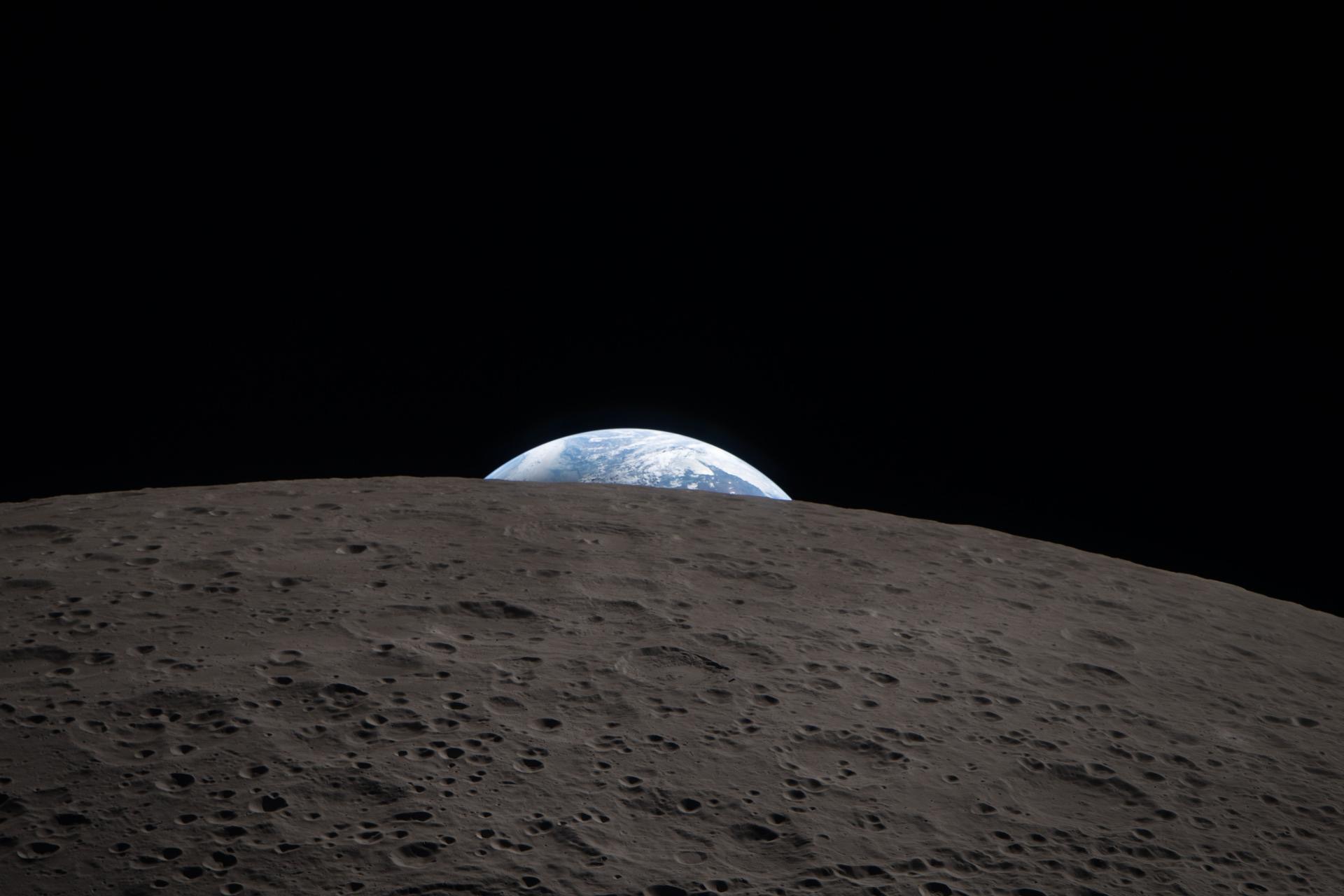
We are from Earth.
It is not a discovery. It is barely an observation. Every person who has ever lived, every argument anyone has ever won, every border that has ever been drawn and defended and redrawn, happened on the same object. There is no second case. There is no control group.
The statement is so obviously true that it has almost no content, which is exactly why it is worth saying out loud. Things that obvious stop being visible. They become the floor rather than the view.
The planet went missing
Most of us do not experience living on a planet. We experience living in a country, in a city, in an industry, in a feed. Those are the units that organise a day. They are real, in the sense that they determine what happens to people, and they are also the only scale most of us ever operate at.
Earth, meanwhile, has become a backdrop. It is weather, which is an inconvenience. It is scenery, which is a holiday. It is the environment, which is a policy area, filed somewhere near transport.
None of that is stupidity. It is what happens when a thing is too large and too constant to register. You do not notice the room you have never left.
But the consequence is strange. We are the first generation that can see the whole of our own habitat, photograph it, model it, watch its systems move in near real time, and we have arranged our attention so that almost none of us ever look.
What distance does
There is a particular thing that happens to people who get far enough away.
The Apollo crews went to photograph the Moon and kept turning the cameras around. The most consequential images from the entire programme are not of the destination. They are of the place the crews had left, small and obviously finite, with nothing visible on it that any of the arguments back home were about.
That effect has been described for decades and it is easy to make cheap. The cheap version says that seeing Earth from space makes people realise we are all one, and then sells you something. The interesting version is narrower and harder to dismiss: at sufficient distance, the organising categories of human life become literally invisible, and what remains visible is a thin film of living matter on a rock, with a very sharp edge.
You do not have to draw a moral from that. It is just a fact about what is there, and it is not the fact most of us are working from.
What this will be
An editorial project about Earth, humanity, and our place inside the living world. Not a campaign, not a charity, not a news service.
The subject is wide on purpose. Geology and cities belong in it. So do deep time, food systems, other species, energy, civilisations that failed, the people doing the practical work of repair, and the question of what we would need to become in order to deserve the place. Those look like different subjects only if you accept the filing system.
Some commitments, so they can be held against us later.
Start with the real thing. Specific places, named species, actual evidence, people with addresses. Abstraction is where accountability goes to hide.
Distinguish what is known from what is argued. Evidence, hypothesis, opinion and speculation are four different things and the difference will be visible in the writing.
Humans are not the opposite of nature. We are a biological population inside the same system, behaving the way a very successful population behaves. That framing makes better predictions than the one where we are a separate malign force acting upon a pristine elsewhere.
Wonder, without sentiment. Beauty is a legitimate reason to look. It is not a substitute for finding out.
No helplessness. Problems are real and despair is not a product. Where understanding connects to something a person could actually do, that connection gets made.
Show the money. As funding, partnerships and projects develop, they get published. Anyone should be able to see who pays for this and what they got for it.
The other half
Understanding on its own is a hobby. The intention is that it leads somewhere.
That is what Protect Earth is for: the practical work, on specific ground, with named people and measurable outcomes. This side of it builds the understanding and the care. That side turns care into something that happens.
The loop is meant to close. A story about a place under threat should be able to become work protecting that place, and the results of that work should become the next story. No claim will be made about impact that has not happened yet.
Where this starts
Small, and in public.
A handful of pieces, made properly, with the sources shown. Then more, as contributors arrive and the work justifies itself. The measure of the first year is not an audience number. It is whether a small group of people would notice if this disappeared.
We are from Earth. It is the only thing every one of us has in common, and we have built almost nothing on top of it.
Worth seeing what happens if we do.